October Reads: Sleep With the Lights On Horror!
Don’t miss out on Hoopla’s Trending Items page!
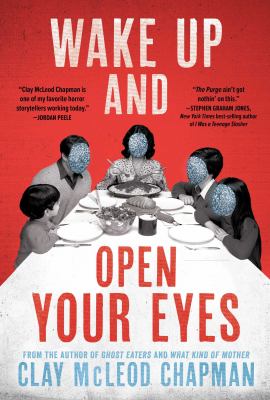
Wake Up and Open Your Eyes
by Clay McLeod Chapman
“From Vulture’s “master of horror” Clay McLeod Chapman, a relentless and emotionally charged social horror novel about a family on the run from a demonic possession epidemic that spreads through media, for fans of The Last of Us and When Evil Lurks. Noah Fairchild has been losing his formerly polite Southern parents to far-right cable news for years, so when his mother leaves him a voicemail warning him that the “Great Reawakening” is here, he assumes it’s related to one of the many conspiracy theories she believes in. But when his own phone calls go unanswered, Noah makes the long drive from Brooklyn to Richmond, Virginia. There, he discovers his childhood home in shambles, a fridge full of spoiled food, and his parents locked in a terrifying trance-like state in front of the TV. Panicked, Noah attempts to snap them out of it and get medical help. Then Noah’s mother brutally attacks him. But Noah isn’t the only person to be attacked by a loved one. Families across the country are tearing each other apart-–literally-–as people succumb to a form of possession that gets worse the more time they spend watching particular channels, using certain apps, or visiting certain websites. In Noah’s Richmond-based family, only he and his young nephew Marcus are unaffected. Together, they must race back to the safe haven of Brooklyn–-but can they make it before they fall prey to the violent hordes? This ambitious, searing novel from “one of horror’s modern masters” holds a mirror to our divided nation, and will shake readers to the core.” – Goodreads
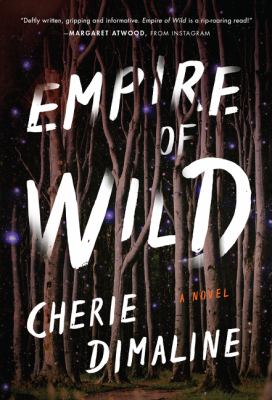
Empire of Wild: A Novel
by Cherie Dimaline
“Joan has been searching for her missing husband, Victor, for nearly a year—ever since that terrible night they’d had their first serious argument hours before he mysteriously vanished. Her Métis family has lived in their tightly knit rural community for generations, but no one keeps the old ways . . . until they have to. That moment has arrived for Joan. One morning, grieving and severely hungover, Joan hears a shocking sound coming from inside a revival tent in a gritty Walmart parking lot. It is the unmistakable voice of Victor. Drawn inside, she sees him. He has the same face, the same eyes, the same hands, though his hair is much shorter and he’s wearing a suit. But he doesn’t seem to recognize Joan at all. He insists his name is Eugene Wolff, and that he is a reverend whose mission is to spread the word of Jesus and grow His flock. Yet Joan suspects there is something dark and terrifying within this charismatic preacher who professes to be a man of God . . . something old and very dangerous. Joan turns to Ajean, an elderly foul-mouthed card shark who is one of the few among her community steeped in the traditions of her people and knowledgeable about their ancient enemies. With the help of the old Métis and her peculiar Johnny-Cash-loving, twelve-year-old nephew Zeus, Joan must find a way to uncover the truth and remind Reverend Wolff who he really is . . . if he really is. Her life, and those of everyone she loves, depends upon it.”
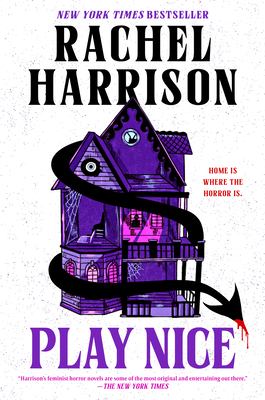
Play Nice
by Rachel Harrison
“Clio Louise Barnes leads a picture-perfect life as a stylist and influencer, but beneath the glossy veneer she harbors a not-so-glamorous secret: she grew up in a haunted house. Well, not haunted. Possessed. After Clio’s parent’s messy divorce, her mother, Alex, moved Clio and her sisters into a house occupied by a demon. Or so Alex claimed. That’s not what Clio’s sisters remember or what the courts determined when they stripped Alex of custody after she went off the deep end. But Alex was insistent; she even wrote a book about her experience in the house. After Alex’s sudden death, the supposedly possessed house passes to Clio and her sisters. Where her sisters see childhood trauma, Clio sees an opportunity for house-flipping content. Only, as the home makeover process begins, Clio discovers there might be some truth to her mother’s claims. As memories resurface and Clio finally reads her mother’s book, the presence in the house becomes more real, and more sinister, revealing ugly truths that threaten to shake Clio’s beautiful life to its very foundation.” — Provided by publisher.
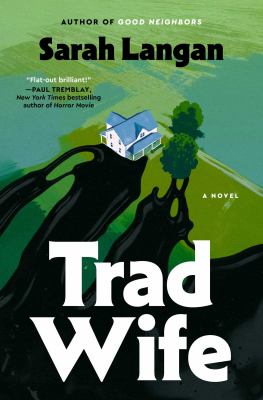
Trad Wife: A Novel
by Sarah Langan
“”A genre beast-menacing, claustrophobic, and wholly unexpected.” -Mariana Enriquez, New York Times bestselling author of Our Share of Night From the three-time Bram Stoker Award-winning author of Good Neighbors comes a chilling tale of a journalist’s descent into horror as she uncovers the dark secrets behind a trad wife influencer, blending suspense with a critique of modern femininity and the manipulative forces of social media. Every day, millions watch Mia Wright, the “trad wife” queen, on her idyllic 300-acre farm. With her handsome husband, seven perfect children, and a life of from-scratch meals and pastoral bliss, she’s an icon of modern femininity. But behind every perfect image is a secret. And in this case, the secret is a horror. Desperate to save her tarnished career, journalist Jenny Kaplan arrives at Black Swan Farm to profile Mia. Jenny is ready to write a scathing expose, determined to expose the deception behind Mia’s curated life. But soon, Jenny has more to contend with than staged videos and picture-perfect poses. There’s something wrong at the farmhouse. Something slithers through Jenny’s dreams, and at night, the children sing strange nursery rhymes. She’s losing time. She’s losing her hair. She starts to worry that she’s losing her mind. There is a horror at the heart of Black Swan, and it’s waiting just for Jenny. Trad Wife will make you question what’s real and what’s just a perfectly curated deception… Will you see the lie?”
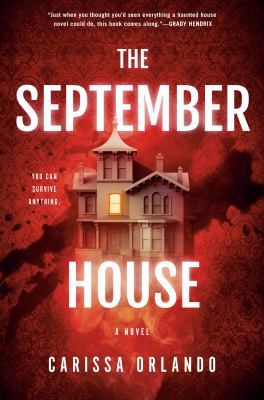
The September House: A Novel
by Carissa Orlando
“A thrilling psychological horror debut about a woman who is determined to stay in her dream home even after it becomes haunted, no matter the cost… You can survive anything. That’s what Margaret tells herself when the walls of her house start to drip blood every September. She’s learned how to live with it…and the other terrifying apparitions that have made the sprawling Victorian house she and her husband bought four years ago turn from a dream home into a living nightmare. But she can outlast all of it. Hal felt differently, though. Her husband couldn’t take the hauntings anymore, and he left. But now he’s not returning calls, and their daughter Katherine arrives, intent on looking for her missing father, convinced something grim has happened to him. With every desperate attempt Katherine makes at finding Hal, the hauntings at the September House grow more harrowing, because there are some secrets the house needs to keep.” — Provided by publisher.
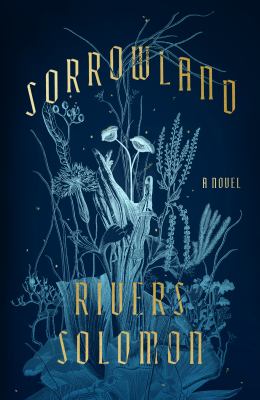
Sorrowland: A Novel
by Rivers Solomon
“Vern escapes the religious compound where she was raised and gives birth to twins in the forest, raising them away from the influence of the outside world. Her community won’t let her go that easily, however, and as they pursue, she breaks the boundaries of humanity, changing her body in uncanny ways in order to protect her family.”
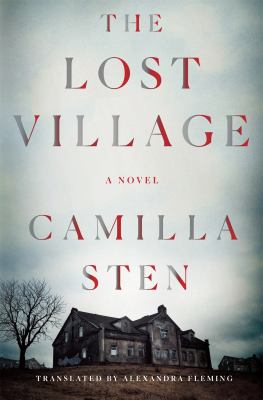
The Lost Village: A Novel
by Camilla Sten
“The Blair Witch Project meets Midsommar in this brilliantly disturbing thriller from Camilla Sten, an electrifying new voice in suspense. Documentary filmmaker Alice Lindstedt has been obsessed with the vanishing residents of the old mining town, dubbed “The Lost Village,” since she was a little girl. In 1959, her grandmother’s entire family disappeared in this mysterious tragedy, and ever since, the unanswered questions surrounding the only two people who were left-a woman stoned to death in the town center and an abandoned newborn-have plagued her. She’s gathered a small crew of friends in the remote village to make a film about what really happened. But there will be no turning back. Not long after they’ve set up camp, mysterious things begin to happen. Equipment is destroyed. People go missing. As doubt breeds fear and their very minds begin to crack, one thing becomes startlingly clear to Alice: They are not alone. They’re looking for the truth… But what if it finds them first? Come find out. “RELENTLESSLY CREEPY.” -Alma Katsu, author of The Hunger (An NPR Best Horror Novel) “IMPOSSIBLE TO STOP READING.” -Ragnar Jonasson, author of The Island.” — Provided by publisher.
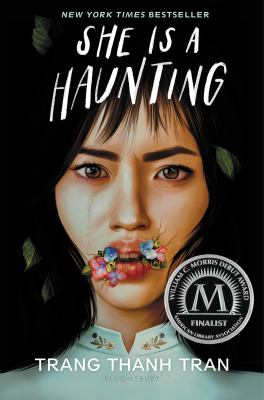
She is a Haunting
by Trang Thanh Tran
“Seventeen-year-old bisexual Jade Nguyen is spending the summer in Vietnam at the French colonial house her estranged father is fixing up as a vacation rental, but unbeknownst to her family, the house and its ghosts have other plans. When Jade Nguyen arrives in Vietnam for a visit with her estranged father, she has one goal: survive five weeks pretending to be a happy family in the French colonial house Ba is restoring. She’s always lied to fit in, so if she’s straight enough, Vietnamese enough, American enough, she can get out with the college money he promised. But the house has other plans. Night after night, Jade wakes up paralyzed. The walls exude a thrumming sound, while bugs leave their legs and feelers in places they don’t belong. She finds curious traces of her ancestors in the gardens they once tended. And at night Jade can’t ignore the ghost of the beautiful bride who leaves her cryptic warnings: Don’t eat. Neither Ba nor her sweet sister Lily believe that there is anything strange happening. With help from a delinquent girl, Jade will prove this house–the home her family has always wanted–will not rest until it destroys them. Maybe, this time, she can keep her family together. As she roots out the house’s rot, she must also face the truth of who she is and who she must become to save them all.”
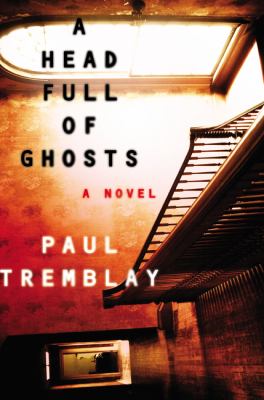
A Head Full of Ghosts: A Novel
by Paul Tremblay
“A chilling domestic drama that blends psychological suspense with a touch of modern horror from a new, brilliantly imaginative master. The lives of the Barretts, a normal suburban New England family, are torn apart when fourteen-year-old Marjorie begins to display signs of acute schizophrenia.To her parents’ despair, the doctors are unable to stop Marjorie’s bizarre outbursts and subsequent descent into madness. As their home devolves into a house of horrors, they reluctantly turn to a local Catholic priest for help. Father Wanderly suggests an exorcism; he believes the vulnerable teenager is the victim of demonic possession. He also contacts a production company that is eager to document the Barretts plight for a reality television show. With John, Marjorie’s father, out of work for more than a year and medical bills looming, the family reluctantly agrees to be filmed never imagining that The Possession would become an instant hit. When events in the Barrett…”
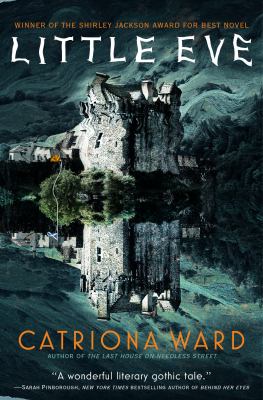
Little Eve
by Catriona Ward
“Winner of the Shirley Jackson Award for best novel and the August Derleth Prize for best horror novel, Catriona Ward’s Little Eve is a heart-pounding literary gothic with a devastating twist. Eve and Dinah are everything to one another, together day and night. They are raised among the Children, a clan ruled by a mysterious figure they call Uncle. All they know is the gray Isle of Altnaharra, which sits alone in the black sea off the wildest coast of Scotland. Eve loves the free, savage life of the Isle and longs to inherit Uncle’s power. But Dinah longs for something more, something different. With the dawn of the first World War, the solitude of Altnaharra is broken, and soon after, Eve’s faith starts to fracture. In the depths of winter, as the old year dies, the nearby townsfolk awaken to discover a massacre on the Isle. Eve and Dinah’s accounts of that night contradict and intertwine. As past and present converge, only one woman can be telling the truth. Who is guilty, who innocent? And who can be trusted?” — Provided by publisher.